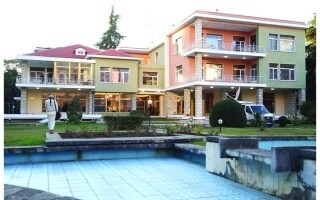
The villa of the former communist dictator Albania, Enver Hoxha, who ruled the country for decades, has now become a symbol of the meeting place for young artists from all over the world, transforming into a place of innovation, exchange, and freedom.
"What challenge for history - to promote freedom of creativity in this place, which was once associated with power, where decisions about censorship and prohibitions were made," - said the director of the French foundation "Art Expl-oration" Bruno Joulard, who helped turn Hoxha's villa into a residency for artists.
The dictatorship of Enver Hoxha, which ended in 1985, was one of the harshest and bloodiest in modern European history, where artistic expression was completely banned, and many artists were thrown into prison.
However, this harsh regime did not hinder Hoxha, who studied in France, from creating his private library, access to which became possible thanks to this project.
As part of the first artistic residency project here, 22 artists from 15 countries are living, engaging in social structures, a theme that was unheard of in the era of dictatorship.
"Villa 31," where the Hoxha family lived until the fall of communism in early 1991, was located in the heart of the banned area for most Albanians, under the protection of police and secret agents.
Leading into the villa door, hidden behind the back of a private cinema, opens a world of tunnels and bomb shelters, stretching for several kilometers, supposedly leading into empty houses, where Enver Hoxha lived.